Following the 2015-2016 NBA season, the Memphis Grizzlies were looking for a coaching change. Just 3 years prior, they had won 56 games and owned the 5th seed in a very competitive Western Conference. That post season they went on a run to the Western Conference Finals where they were swept by the San Antonio Spurs. That offseason, the Grizzlies decided to part ways with their then head coach, Lionel Hollins. The man that they replaced him with, Dave Joerger, as alluded to, only lasted 3 seasons with the team due to underwhelming post season success.
This new coaching change, came in the form of David Fizdale. David was most known for at the time to be an assistant coach of a Miami Heat team that went to 4 consecutive NBA Finals, winning 2. This was David Fizdale’s first head coaching job and it was with a team who had some great veteran players such as Marc Gasol and Mike Conley. These players have seen the post season multiple times and making the playoffs was the expectation for the squad. They did exactly that. David Fizdale led his Memphis Grizzlies so a record of 43-39 which was good for 7th in the Western Conference.
This finish matched them up with a familiar foe, the San Antonio Spurs. The Memphis Grizzlies had been eliminated from the playoffs by that squad in 2 of the last 4 years. However, Memphis kept the faith that, with a new head coach, an upset could be in their future. After a game 1 loss which saw Fizdale’s Memphis squad lose by 29, that did not seem to be the case. Game 2 of the series did not look much better as the Grizzlies found themselves down 19 points at halftime. Everything seemed to point to them getting swept by the Spurs, the same as just 1 year prior. But the Grizzlies would not go down without a fight, clawing their way back to only be down by 4 points heading into the final 9 minutes of the game.
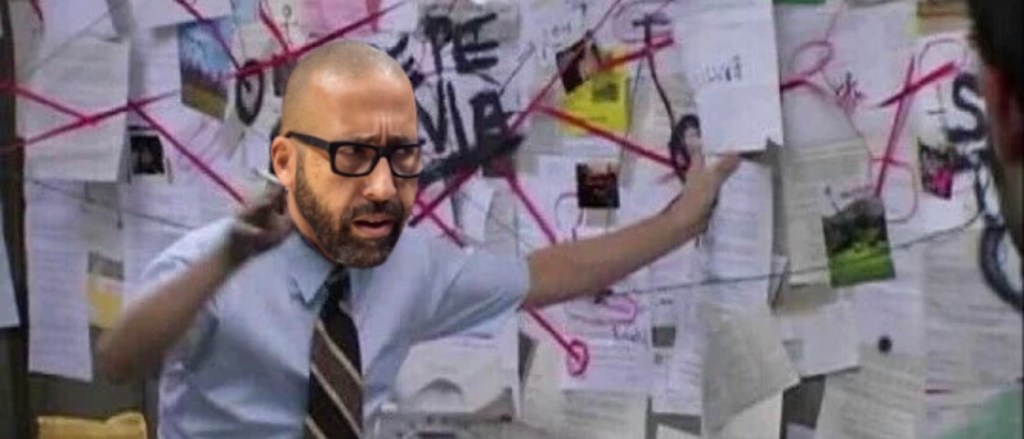
Unfortunately, Memphis ended up losing game 2, 96-82. Which leads us to the crux of the story. After years of falling short, with different head coaches, and some real talent on the roster, it all hit a boiling point in David Fizdale’s post game interview. David was furious with the level of officiating due to the Spurs going to the line at a much larger clip than the Grizzlies. Fizdale explained “First half we shot… nineteen shots in the paint and had six free throws. They shot eleven times in the paint and had 23 free throws.” He added “I’m not a numbers guy but that doesn’t seem to add up.” He went on to point out that the Spurs star player, Kawhi Leonard, shot more free throws than all Grizzlies players combined. His last point, and most important, was that, they did not get the same calls that the spurs were getting due to their high profile and veteran head coach Gregg Popovich. Who, at the time and still is, the longest tenured head coach in the league. All this culminated in David Fizdale exclaiming, “They not gonna Rook us.”
Is there a “rook” problem in the NBA? Are coaches, or even players, that have been around the game the longest, getting more calls? Does more tenure corelate with more free throws? After looking through the data for specifically the 2016-2017 NBA season the answer is, no, probably not. Pulling all player data for the season reveals that there is no correlation between the head coach’s tenure and the number of free throws that each player shoots per game.
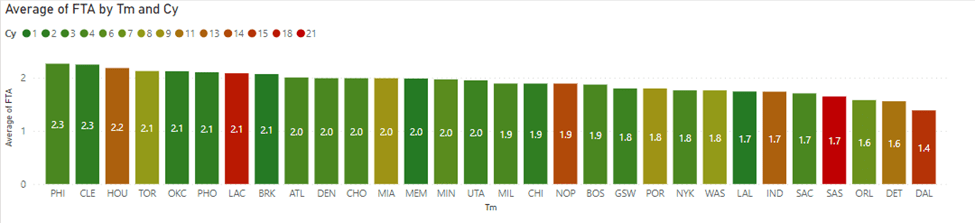
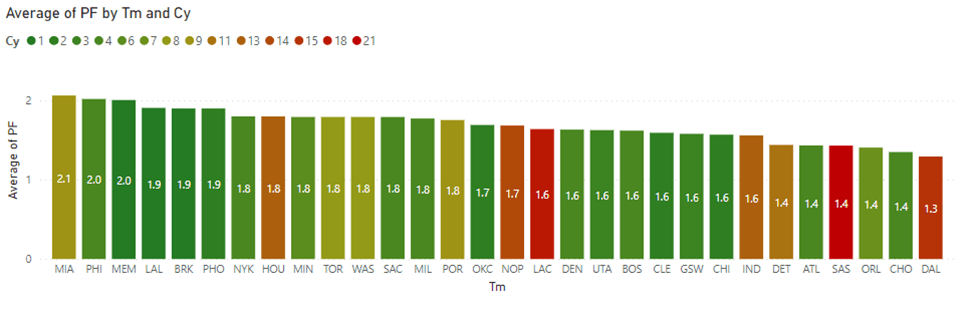
In the graph above, it is shown that players that have coaches that have been in the league for multiple seasons do not have more free throws attempted per game. If anything, the opposite may be true. Highlighting the Grizzlies and the Spurs, it can be expected that the average Grizzlies player would shoot .3 more free throws per game than the average Spurs player. These same conclusions can be drawn when looking at the graph for normal personal fouls as seen below.
While the conclusions that can be drawn from coaching tenure may seem disappointing, player age tells a different story. Below is a graph plotting the amount of players in the NBA at each age going into the season against the sum total of their free throws attempted per game. Following conventional thinking, it would go without saying that the age that has the most players would also have the most free throws attempted per game but that is not the case.
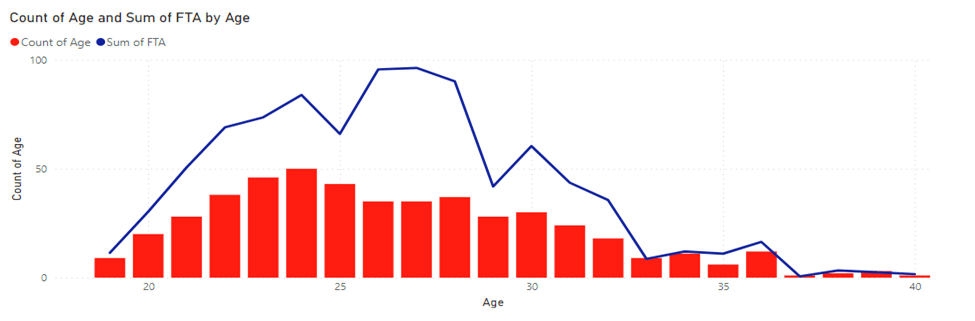
As seen on the graph, the age range with the most players are 23-25 years old. However, the players that have the most free throws per game come from the age range of 26-28. The same is seen when looking at all players in the NBA that season with the most free throws attempted per game. Out of the top 10, only 3 fall outside the 26-28 “prime” age range for free throws attempted.

Those 3 players, Anthony Davis, Joel Embiid, and Giannis Antetokoupo, are all big men that play close to the rim and are prone to contact. Apart from DeMarcus Cousins, the other players are all relatively small, ranging from Isaiah Thomas at a staggering 5 foot 9 inches to Jimmy Butler who is listed at 6 foot 7 inches.
From this, the conclusion that can be drawn is that as a player gets closer to their “prime”, which from a study at Dartmouth is considered to be 27-28, they can expect to shoot more free throws per game. This may be because they have the ball in their hands more often and when they hit their “prime” teams often will build around them. Players in this age range are more likely to be comfortable playing against that level of competition as, by that point, they have been in the league for almost 10 years.
Another conclusion that can be drawn from the graph above is that, a high number of free throws attempted per game early in your career can be used as a predictor for success in the NBA. Between the 3 young players in the top 10, they combine for 2 championship rings, 1 Finals MVP, 3 League MVPs, and 8 top 3 MVP finishes. Following this logic Paolo Banchero, who is currently 21 and 11th in FTA per game may be in for an excellent career.
So, what does that all mean? Does that mean David Fizdale was wrong? Was he just some conspiracy theorist that should be fired from the Grizzlies? Well, he may not be getting “rooked” he may be on to something. During that 2016-2017 season, Kawhi Leonard was 25 and he averaged 7.2 free throws attempted per game which is the best mark of his career. The other highest mark was 7.1 when he did that at 28 and 29. In Kawhi’s first 5 seasons, he never even reached 5 free throws attempted per game. This falls perfectly in line as the Spurs long time leader, Tim Duncan, had just retired after the 2015-2016 season leaving Kawhi Leonard as the primary option on offense going into the 2016-2017 season.
In contrast, the Grizzlies top 3 players in usage rate were all on the wrong side of the data. Zach Randolph was 35 and averaged 2.6 free throw attempts. Marc Gasol was 32 and averaged 4.5 free throw attempts. Lastly was Mike Conley who was the team’s primary ball handler and average a respectable 5.3 free throw attempts per game.
But that was 7 years ago so what does that have to do with the NBA today? Well, as November 14th, 2023, the team with the most free throws attempted per game is the Milwaukee Bucks with first year head coach Adrian Griffin. In contrast, the team with the fewest free throw attempts is none other than the San Antonio Spurs who are still led by Gregg Popovich who is now in his 27th year in the position.
The Grizzlies went on to battle back in the series against the Spurs but ultimately falling short and losing 4 games to 2. David Fizdale was fired only 19 games in to the 2017-2018 season after a 7-12 start. The Grizzlies floundered to 14th in the Western Conference and were forced to rebuild. While Fizdale may not have been the answer to all the woes in Memphis, he certainly left a lasting impression on the city and the NBA with his speech after game 2 of the 2017 Western Conference first round. As David Fizdale got up from his seat the last thing he did was pound the table and exclaim “Take that for data.”

 Superfluous Analytics
Leave a comment